
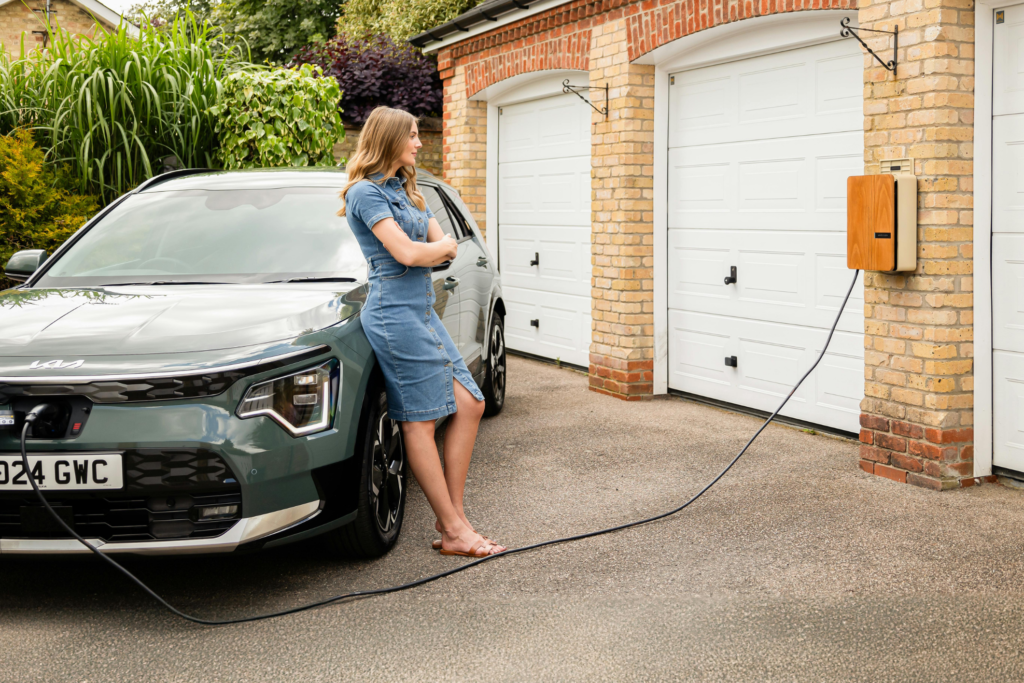
There is a familiar and growing frustration that comes with pulling up to the bowser these days. You watch the price tick higher, fully aware that geopolitical tensions and shifting international markets are directly impacting your household budget. Fuel prices have become one of the most unpredictable and stressful costs of owning a vehicle, leaving many Australian drivers searching for a way to regain control of their increasing transport costs.
The recent cycle of fuel prices rising and falling perfectly illustrates the ongoing stress of unpredictable pump prices and why budgeting for a petrol vehicle is becoming so difficult. Earlier in 2026, international oil markets were disrupted by conflict in the Middle East, putting immediate pressure on Australian petrol and diesel prices. And while the Australian Government introduced a temporary fuel-excise relief which saw fuel prices drop, that excise has now ended.
Following this, average petrol and diesel prices have increased again. This cycle highlights a difficult reality: when you rely on traditional fuel, you are attempting to budget for a constantly moving target. For drivers who commute daily or cover significant distances, this volatility makes it impossible to accurately forecast your long-term transport expenses. This leaves your finances vulnerable to sudden price spikes.
Fuel prices are only part of the change happening in Australia’s automotive market. As fuel costs remain volatile, electric vehicles (EVs) are becoming the simplest way to dodge the petrol station. At the same time, the market is undergoing a massive competitive shift. Newer car brands like BYD are rapidly expanding their market share, putting unprecedented pressure on established, legacy manufacturers like Toyota to innovate or risk losing customers.
In July 2026, Australia recorded 103,656 new vehicle sales. According to the Federal Chamber of Automotive Industries (FCAI) and their and their monthly new vehicle sales report, VFACTS, battery electric vehicles (BEVs) continue to capture a large segment of the market. To see exactly how aggressively these new manufacturers are pushing into legacy territory, we only need to look at recent data from June 2026 where BYD undersold the long-time market leader Toyota by only 243 units.
David Hinchliffe, one of our Client Relationship Managers, notes that while Toyota maintains its overall market dominance (historically outselling BYD by roughly 2.5 times annually), this data reveals a genuine shift in consumer preference.
“BYD is not bigger than Toyota in any metric, but their market share relative to Toyota is rapidly expanding, and in one month they nearly beat them,” David explains.
The data highlights this rapidly closing gap between the two automakers:
| Period | Toyota units | BYD units | BYD as % of Toyota | Toyota-to-BYD ratio |
|---|---|---|---|---|
| Calendar 2024 | 241,296 | 20,458 | 8.5% | 11.8× |
| Calendar 2025 | 239,863 | 52,415 | 21.9% | 4.6× |
| Jan – Jun 2025 | 120,978 | 23,355 | 19.3% | 5.2× |
| July 2025 | 21,722 | 4,607 | 21.2% | 4.7× |
| Jan – Jun 2026 | 95,141 | 52,335 | 55.0% | 1.8× |
| July 2026 | 20,409 | 7,857 | 38.5% | 2.6× |
| Jan – Jul 2026 | 115,550 | 60,192 | 52.1% | 1.9× |
Hinchliffe points out that a key driver of this shift is the vehicle technology itself. BYD’s lineup focuses heavily on full EVs and Plug-in Hybrids (PHEVs) which can run on electric power alone. On the other hand, Toyota’s lineup relies heavily on conventional hybrid systems, which generally only allow for EV-only driving in strict, low-speed conditions.
For other legacy manufacturers like Ford and Mazda, this means competing on much more than just historical brand loyalty. Australia’s New Vehicle Efficiency Standard (NVES) compounds this pressure by threatening financial penalties for brands that fail to meet progressively stronger emissions targets. To survive this legislative and competitive squeeze, these automakers must rapidly expand their range of highly fuel-efficient petrol and diesel vehicles, hybrids, and EVs.
As we have explored previously, the arrival of aggressively priced EVs gives you a genuine alternative to traditional petrol and diesel vehicles. This means the initial drive-away price is no longer the only number that matters. Instead, drivers can now weigh the initial purchase price against long-term energy costs, servicing, and expected resale value. Ultimately, the goal is no longer just finding a car that fits your lifestyle but choosing one that can protect your household budget from unpredictable fuel prices over the next three to five years.
Whether you choose to buy a car outright or finance it, the payment method you select will significantly affect your total cost of ownership. For eligible employees, salary packaging offers a unique way to manage these expenses. A novated lease is a form of salary packaging that combines vehicle finance with many ongoing costs including registration, insurance, servicing, and fuel or charging costs into one regular pre-tax salary deduction. This can make it much easier to budget for the total cost of owning a vehicle.
While you can’t control the shifting price of fuel, you can control how exposed your budget is to those fluctuations. At the same time, Australia’s automotive market is becoming more competitive as EVs grow, new manufacturers challenge established brands and efficiency standards influence the vehicles available to buyers.
For your budget, this makes the total cost of ownership increasingly important. An EV may offer compelling value for some drivers, while a hybrid, petrol or diesel vehicle may remain the better option for others. The important thing is to compare how each vehicle fits your driving needs, budget and expected running costs rather than focusing only on the sticker price.
The team at Prosperity Smart Drive can help you compare suitable vehicles, estimate potential savings and understand how a novated lease could work for your circumstances.